What NGOs, Embassies and Developers Should Ask Before Hiring a Survey Company

Apex Surveyors Team
If you are about to hire a surveyor in South Sudan, you are probably under some pressure already. Maybe a donor timeline is ticking, a compound needs to be built, or a plot has to be verified before money changes hands. Whatever the reason, the survey is the first step that every later decision depends on, and a bad one can quietly cost you months.
We work with international organizations, diplomatic missions, and private developers, and the same pattern comes up again and again. The projects that go smoothly started with the right questions. The ones that struggle usually skipped them. Here is what we would ask if we were in your shoes.
1. What exactly will I receive at the end?
This sounds obvious, but it is where most misunderstandings begin. A surveyor can hand you anything from a simple sketch to a full set of CAD drawings, coordinates, and a signed report.
Ask to see a sample deliverable. Find out whether you get digital files your architect can open, printed and signed plans, or both. If your project has a funder or auditor behind it, ask whether the report format will satisfy their documentation requirements.
2. What equipment will you use, and is it properly maintained?
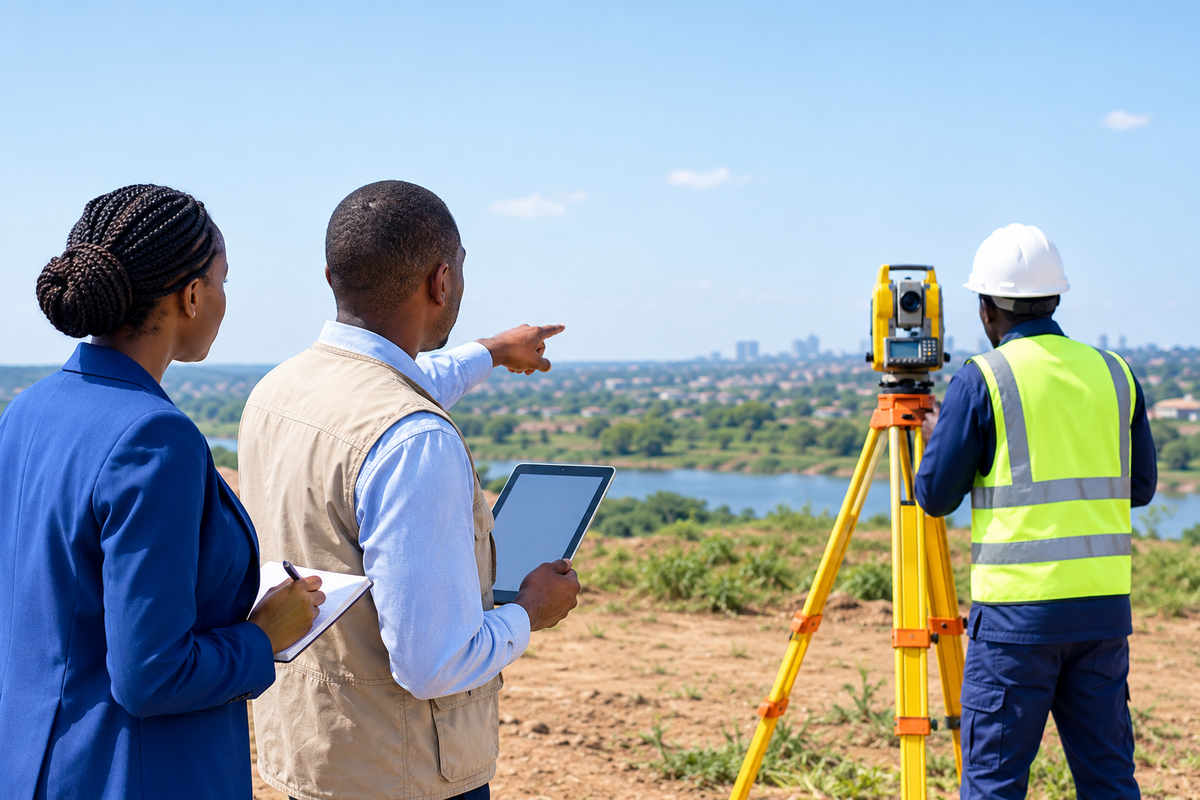
You do not need to understand every instrument. You just need to know the company uses professional-grade gear, such as GNSS receivers and total stations, and looks after it. Equipment that drifts out of calibration produces measurements that look fine on paper and fail on site.
A good company will happily tell you how often its instruments are checked and what happens if a reading looks off. If the answer is vague, treat that as information.
3. Have you worked on sites like mine?
Surveying a flat, open plot in a city is a different job from mapping a remote site with limited access, seasonal flooding, or unclear land records. Ask for examples of similar projects, ideally with references you can actually call.
For international clients, it also helps to ask whether the team has experience working with donor-funded projects, security protocols, and the paperwork that comes with them.
4. How do you handle land boundaries and ownership questions?
In fast-growing areas, records are not always complete, and neighboring plots can overlap in ways nobody noticed until a wall goes up. Ask how the company verifies boundaries, which documents it checks, and how it deals with disputes or mismatches between a title and what it finds on the ground.
This matters most if you are leasing, buying, or building long-term. A boundary problem found before construction is an inconvenience. Found afterwards, it can become a legal case.
5. What is your realistic timeline, and what could delay it?
Be wary of a quote that sounds too fast. Rainy season, access issues, and permit requirements can all affect fieldwork. A trustworthy surveyor will explain the likely timeline, point out the risks, and tell you early if something changes.
Ask how progress will be communicated. Weekly updates are far better than silence followed by a deadline surprise.
6. Who is actually doing the fieldwork?
Some companies sell the job and subcontract the work to people you never meet. That is not always a problem, but you should know. Ask who will lead the survey, what qualifications the team holds, and whether the person you speak to during the sales process will be involved when the work begins.
7. How is the data checked before you see it?
Good surveyors double-check their own work. Ask about quality control: are measurements verified against known reference points, and does a second person review the results before they reach you?
This one question tells you a lot about how seriously a company takes accuracy.
8. Can the data be used for what comes next?
A survey is rarely the end of the story. Architects, engineers, and planners will build on it. Ask whether the data can feed into design software, 3D models, or drone and LiDAR mapping if your project grows more complex. Getting the right format the first time saves you from paying for the same site to be measured twice.
9. What does the price include, and what does it not?
Compare quotes on what is covered, not just the total. Check whether travel, accommodation, report production, and revisits are included. A lower price that leaves out half the work is rarely cheaper in the end.
10. What happens if something is wrong?
Finally, ask what the company does when an error turns up. A confident, professional team will have a clear answer about corrections and follow-up. If there is no process for fixing mistakes, that tells you what you need to know.
A Simple Way to Use This List
You do not need to ask all ten in one meeting. Pick the five that matter most for your project, send them in writing, and compare the answers side by side. Clear, specific replies are a good sign. Vague or defensive ones are worth noticing before you sign anything.
Looking for a Survey Partner You Can Trust?
At Apex Surveyors ASME, we handle topographic surveys, boundary and subdivision work, engineering surveys, drone mapping, and 3D capture for clients across South Sudan. We are happy to walk you through exactly how we work and answer every question on this list, before you commit to anything.
Get in touch with our team to talk through your project, or browse our full list of services to see how we can help.