Why More Surveyors and Contractors in Juba Are Leasing Survey Equipment Instead of Buying

Apex Surveyors Team
Why More Surveyors and Contractors in Juba Are Leasing Survey Equipment Instead of Buying
If you've ever priced out a robotic total station or a full GNSS RTK setup, you already know the number can stop a project in its tracks. A decent total station package (total station, tripod, prism, prism pole) starts at around $2,500, and a GNSS kit isn't far behind. For a surveyor just starting out in Juba, or a contractor who only needs precision equipment for one phase of a build, that's a lot of capital tied up in gear that might sit idle for weeks at a time.
That's exactly why leasing survey equipment has become such a practical option for surveyors, engineers, construction firms, and NGOs working across Juba and the wider South Sudan.
The Real Cost of Owning Survey Equipment in South Sudan
Survey instruments are precision tools. They need calibration, careful storage, insurance, and, sooner or later, servicing that often means shipping parts in from outside the country. Add to that the reality that South Sudan's infrastructure and NGO-driven projects don't always run on a predictable schedule, and owning a full inventory of dumpy levels, total stations, GNSS units, and drones can quickly become dead weight on a balance sheet rather than a productive asset.
For many businesses, the maths simply works better when the equipment is rented for the exact stretch of time it's needed: whether that's a two-week boundary survey in Hai Gudele, a road alignment project outside Juba, or a longer topographical mapping contract in another state.
Who Benefits Most From Leasing Survey Equipment
Independent and early-career surveyors. Not everyone starting a survey practice in Juba has the capital to buy a total station, GNSS unit, and levelling kit all at once. Leasing lets you take on paying contracts immediately, using professional-grade equipment, without the upfront investment.
Construction and engineering firms. If your business does the occasional setting-out or as-built survey but isn't a full-time surveying outfit, owning specialised equipment rarely makes financial sense. Renting for the specific phase of the project keeps costs tied to actual revenue-generating work.
NGOs and development projects. Many organisations operating in South Sudan need mapping, GIS data, or topographical surveys for a defined project period. Leasing equipment (and pairing it with trained personnel) avoids the logistics of importing, insuring, and eventually disposing of equipment once the project wraps up.
Anyone testing new technology. Drone survey and RTK GNSS have changed how quickly topographic and boundary data can be captured. Leasing is a low-risk way to try these tools on a real project before committing to a purchase.
What Equipment Can Be Leased
Depending on the scope of your project, the equipment you'd typically look at leasing includes:
- Total stations (total station + tripod + prism + prism pole): for topographic surveys, setting out, and monitoring construction
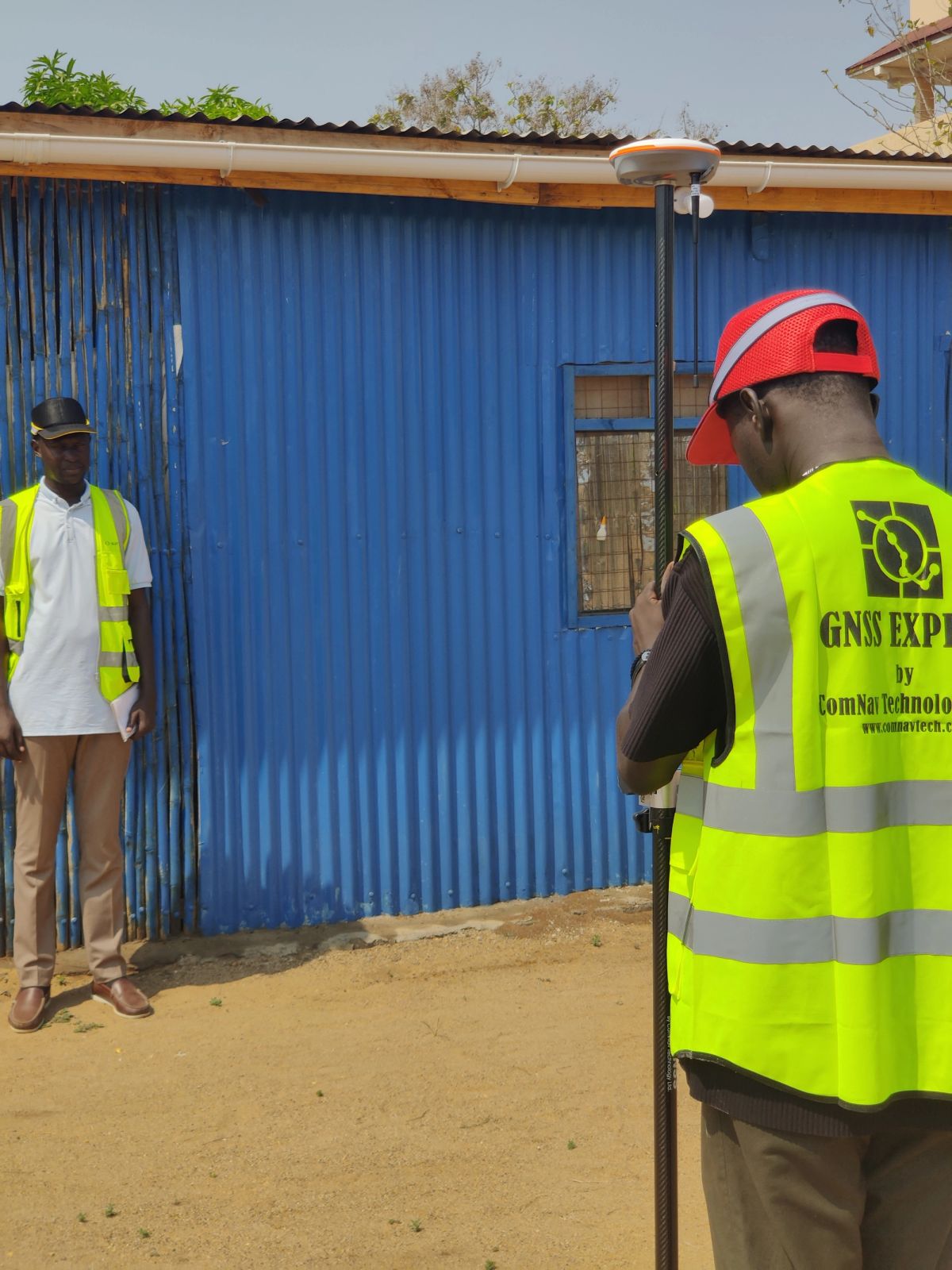
- GNSS + tripod + pole setups: for fast, RTK-accurate geodetic control and topographic data collection
- Dumpy levels (level + tripod + staff): for grading, drainage, and any work where plumbness and slope accuracy matter
- Drones: for large parcels, inaccessible terrain, or linear infrastructure such as roads, transmission lines, and pipeline routes
- Handheld GPS units: for quick navigation, waypoint recording, and reconnaissance work
- Tripods and levelling staffs: as standalone rentals to complement equipment you already own
What to Check Before You Lease
A few things are worth confirming with any equipment provider before you sign on for a lease in Juba or elsewhere in South Sudan:
- Calibration status - ask when the instrument was last calibrated and whether calibration certificates are available.
- Included accessories -a total station without a working prism pole isn't much use on site. Confirm exactly what's bundled into the lease price.
- Support and training - especially for GNSS and drone equipment, make sure there's someone who can walk you through setup, or provide operator training if your team is new to the tech.
- Availability and turnaround - projects in South Sudan don't always start on schedule, so check how flexible the lease period and pickup/return process is.
- Local backup - equipment sourced and supported locally means faster replacement if something goes wrong on site, rather than waiting on shipments from outside the country.
Leasing Survey Equipment in Juba with Apex Surveyors
At Apex Surveyors, we supply and lease the full range of survey and measuring equipment -total stations, GNSS + tripod + pole kits, dumpy levels, drones, handheld GPS units, tripods, and levelling staffs - to surveyors, engineers, contractors, and organisations working across Juba and South Sudan. As a team with over a decade of experience in East Africa's surveying and geospatial industry, we also offer GIS, CAD, and survey training if your team needs to build in-house capacity alongside the equipment.
Whether you need a total station for a two-week boundary survey in Hai Gudele or a full GNSS setup for a longer topographical mapping contract, we can help you get the right equipment without the upfront cost of ownership.
Ready to lease survey equipment for your next project? Get in touch with Apex Surveyors or chat with our team directly on WhatsApp.